The Future of AI Creative Tools: 2026 and Beyond
We are in the middle of the most significant shift in creative tooling since the invention of digital design software. AI-powered creative tools have gone from curiosity to essential workflow component in under three years. But where are they heading? What will AI creative tools look like by the end of 2026, by 2027, and beyond?
This article offers grounded predictions based on current trajectories, research directions, and industry trends. No wild speculation. Just an honest look at what is likely coming and what it means for creators, businesses, and the creative industry as a whole.

Where We Stand in 2026
Before predicting the future, let us establish the present. Here is what AI creative tools can reliably do today:
- Image generation: Near-photorealistic images from text prompts across virtually every art style, with much-improved hand rendering and fine detail compared to earlier generations. See our explainer on how AI image generation works.
- Video generation: Short clips (3-30 seconds) with coherent motion, good camera control, and improving quality. Read more in our text-to-video guide.
- Image editing: AI-powered inpainting, outpainting, style transfer, background removal, and upscaling that save hours of manual work.
- Audio generation: Music, sound effects, and voice synthesis from text descriptions.
- 3D generation: Early-stage but rapidly improving text-to-3D model generation.
This is already remarkable. Two years ago, most of these capabilities either did not exist or were experimental. The pace of improvement has been extraordinary, and it is not slowing down.

Prediction 1: The Quality Gap Closes Completely
The remaining visual quality gaps between AI-generated images and professional photography will close by late 2026 or early 2027. Specifically:
- Hands and fingers will be consistently accurate. This has already improved massively from the early days when AI-generated hands were infamously wrong. The last edge cases are being solved.
- Text within images will be reliably legible. Generating images that contain accurate, readable text has been a stubborn problem. Current research is making rapid progress.
- Consistent characters across multiple images will become a standard feature, not a workaround. You will be able to define a character once and generate them in different poses, settings, and situations with reliable consistency.
- Complex multi-person scenes with specific spatial arrangements will work as described, without the misplacement and merging issues that currently affect crowded prompts.
This does not mean AI images will be "perfect." It means the visual tells that currently allow a trained eye to spot AI-generated images will largely disappear, raising important questions about authenticity and disclosure.
Prediction 2: Video Generation Becomes Practical
Text-to-video in early 2026 is impressive but limited. By the end of 2026 and into 2027, expect:
- Longer coherent clips. From the current 3-30 second range to 1-3 minute clips with maintained character and scene consistency.
- Better human motion. Natural walking, talking, gesturing, and interacting that does not fall into the uncanny valley. This is one of the most heavily researched areas in AI video.
- Integrated audio. Video with matching sound effects, ambient audio, music, and potentially synchronized speech will become standard rather than experimental.
- Frame-level editing. The ability to generate a video, then modify specific frames or segments without regenerating the entire clip. This transforms video generation from a one-shot process to an iterative creative workflow.
The practical impact: small businesses, independent creators, and marketing teams will be able to produce video content that previously required professional production crews and budgets. Not feature films, but the kind of short-form video that dominates social media, advertising, and web content.
Prediction 4: 3D Generation Matures
Text-to-3D is where text-to-image was about two years ago: clearly powerful, clearly limited, and clearly on a trajectory toward mainstream usability. By late 2026 to mid-2027, expect:
- Usable 3D models from text. Not just rough shapes but detailed, textured 3D models suitable for game assets, product visualization, architectural previews, and animation.
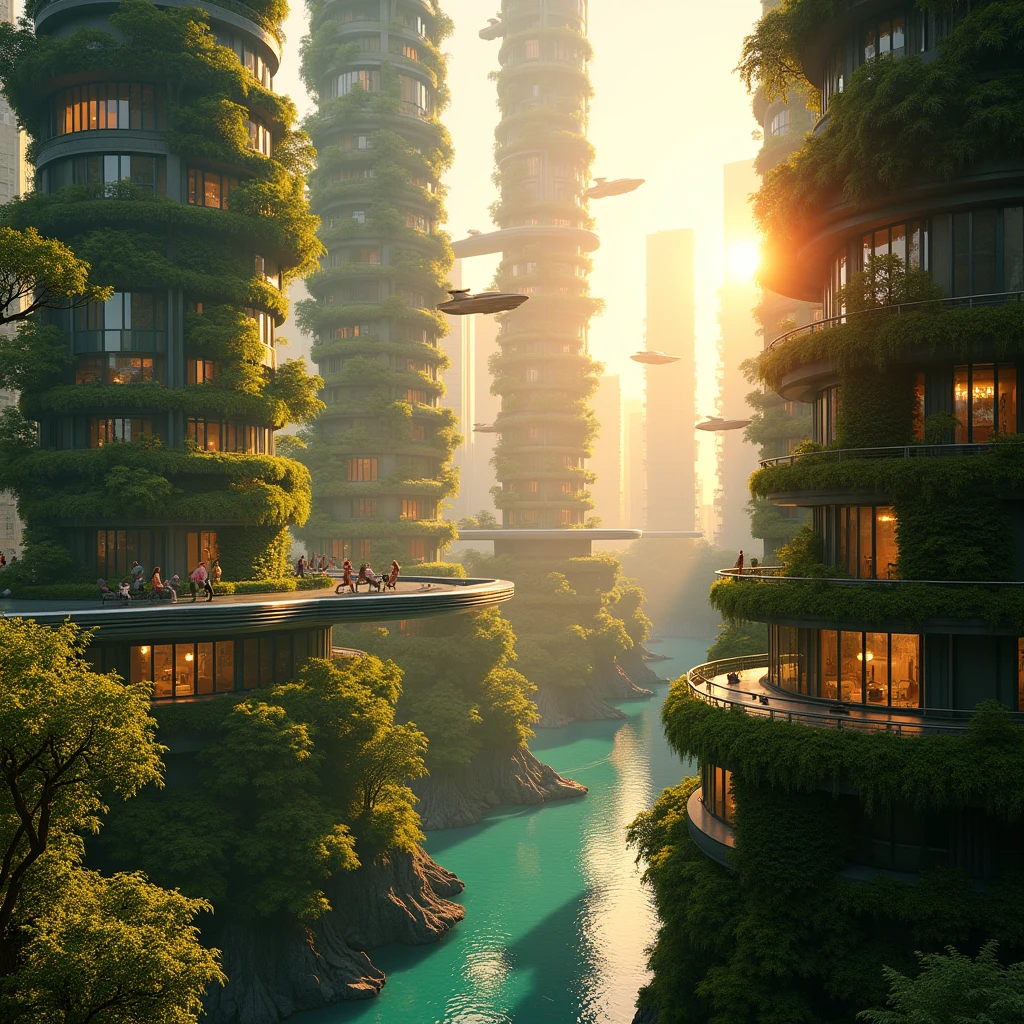
- Scene generation. Entire 3D environments, not just individual objects, generated from text descriptions. Imagine describing a room, a landscape, or a city block and getting a navigable 3D scene.
- Integration with existing 3D workflows. AI-generated 3D assets that export cleanly to standard formats and work in established tools like Blender and Unity.
The impact on game development, architecture, product design, and virtual reality will be enormous. Creating 3D content has always been one of the most time-intensive creative tasks. AI will not eliminate 3D artists but will dramatically accelerate their workflows and lower the barrier to entry for 3D content creation.
Prediction 5: Personalized Creative AI
Today, AI creative tools are general-purpose. You get the same model and capabilities as every other user. The future involves personalization:
- Style learning. AI that learns your aesthetic preferences over time, understanding what you like and do not like, and biasing its output toward your taste without explicit instruction.
- Brand memory. Tools that remember your brand colors, typography preferences, image style, and visual language, automatically applying them to new generations.
- Workflow adaptation. AI that understands your creative process and anticipates your needs, offering relevant suggestions and automating repetitive steps.
- Domain specialization. AI models fine-tuned for specific industries: fashion, architecture, food photography, medical illustration, each with deep domain knowledge that general models lack.
This means the AI creative tool you use a year from now will feel like a creative partner that knows you, rather than a generic machine you have to instruct from scratch each time.

Prediction 6: The Workflow Revolution
Perhaps the most impactful change will be how AI tools integrate into creative workflows. Rather than standalone generators, AI will become woven into every step of the creative process:
Ideation
AI will generate dozens of concept variations from a brief in seconds, allowing creative teams to explore a much wider solution space before committing to a direction. Brainstorming sessions will be augmented with instant visual prototyping.
Production
Tasks that currently take hours, background removal, color correction, format adaptation, style matching, will be automated. Creators will focus on creative decisions rather than mechanical execution.
Iteration
Instead of rebuilding assets from scratch for each revision, AI will allow modifications through natural language. "Make the sky warmer," "add more contrast," "change the style to watercolor" will work on existing images without regenerating them entirely.
Distribution
AI will automatically adapt creative assets for different platforms, screen sizes, and formats. A single source image will generate social media variants, website banners, email headers, and print materials with appropriate dimensions, crops, and styling.
Prediction 7: New Creative Roles Emerge
As AI tools become more capable, new creative roles will solidify:
- AI Creative Director: A person who defines the visual language, curates AI output, and ensures creative coherence across a project or brand. This role already exists informally but will become a recognized position.
- Prompt Engineer: Specialists who understand how to get the best results from AI creative tools, developing reusable prompt systems and workflows for organizations.
- AI Art Curator: Professionals who evaluate, select, and present AI-generated work, applying the critical eye and contextual knowledge that distinguishes meaningful creative output from generic generation.
- Human-AI Collaboration Specialist: A role focused on designing workflows that optimally combine human creativity with AI capability, maximizing the strengths of both.
These roles do not replace traditional creative positions. They represent new specializations that sit alongside and interact with existing creative teams. The best creative departments will combine traditional artistic skills with AI fluency.

What Will Not Change
Amid all this change, some things will remain constant:
- Human creativity remains essential. AI tools will become more powerful, but the creative vision, emotional intelligence, cultural understanding, and strategic thinking that humans bring will remain irreplaceable. AI executes. Humans envision.
- Quality curation matters more, not less. As AI makes it easy to generate enormous quantities of visual content, the ability to distinguish good from great, appropriate from generic, becomes more valuable, not less.
- Storytelling transcends tools. The ability to tell a compelling visual story, to communicate ideas and emotions through imagery, is a human skill that AI enhances but does not replace.
- Authenticity has value. In a world flooded with AI-generated content, genuine human-created work and authentic photography will develop a premium value, particularly in contexts where trust and transparency matter.
What This Means for You
If you are a creator, the practical implications are clear:
- Start learning now. AI creative tools have a learning curve, and the skills you develop today will compound as the tools improve. The earlier you start, the more proficient you will be when these tools become standard.
- Do not abandon traditional skills. Understanding composition, color theory, visual storytelling, and design principles makes you a better AI user. These fundamentals amplify the value of AI tools rather than being replaced by them.
- Experiment widely. Try different approaches: text-to-image, image-to-video, image generation, style transfer. The more versatile your AI toolkit, the more creative options you have. Explore different AI art styles and prompt techniques.
- Focus on creative vision. As execution becomes easier, the value shifts to having good ideas, strong aesthetic judgment, and clear creative direction. Invest in developing your eye and your taste.
- Stay informed. The field moves fast. Follow developments, try new tools as they launch, and be ready to adapt your workflow as capabilities evolve.
The future of AI creative tools is not about AI replacing human creativity. It is about AI amplifying it, making it more accessible, more productive, and more ambitious than ever before.
Frequently Asked Questions
Will AI replace graphic designers and artists?
AI is more likely to transform creative roles than eliminate them. Designers and artists who learn to work with AI tools will be significantly more productive. The demand for human creative direction, curation, brand strategy, and artistic vision will remain strong. The roles will evolve to focus more on creative leadership and less on manual execution.
How fast is AI image quality improving?
Extremely fast. The quality of AI-generated images in 2026 is dramatically better than what was possible just two years ago. Areas like hand rendering, text generation within images, and photorealistic human faces have all seen major improvements. The pace of improvement shows no signs of slowing.
Will AI-generated video replace traditional filmmaking?
Not in the near future. AI video generation is excellent for short clips, concept visualization, and social media content, but it cannot replace the nuanced direction, storytelling, and human performance that traditional filmmaking delivers. AI will become an increasingly powerful tool in the filmmaking pipeline, but human-directed filmmaking will remain essential.
What new AI creative tools will emerge by 2027?
Expected developments include real-time collaborative AI design tools, AI-generated 3D models and environments from text, integrated audio-visual generation, AI-assisted animation tools, and personalized AI models that learn individual aesthetic preferences over time.
Should I learn AI creative tools now or wait?
Now is the ideal time to start. The tools are accessible, many offer free tiers, and the skills you develop will compound as the technology improves. ZSky AI offers free credits to get started with no credit card required.
The Future Starts Now
Do not wait for tomorrow's tools to start building tomorrow's skills. Explore AI creative tools today.
Start Creating Free →Related read: AI Art Predictions 2026: 10 Trends Already Coming True.